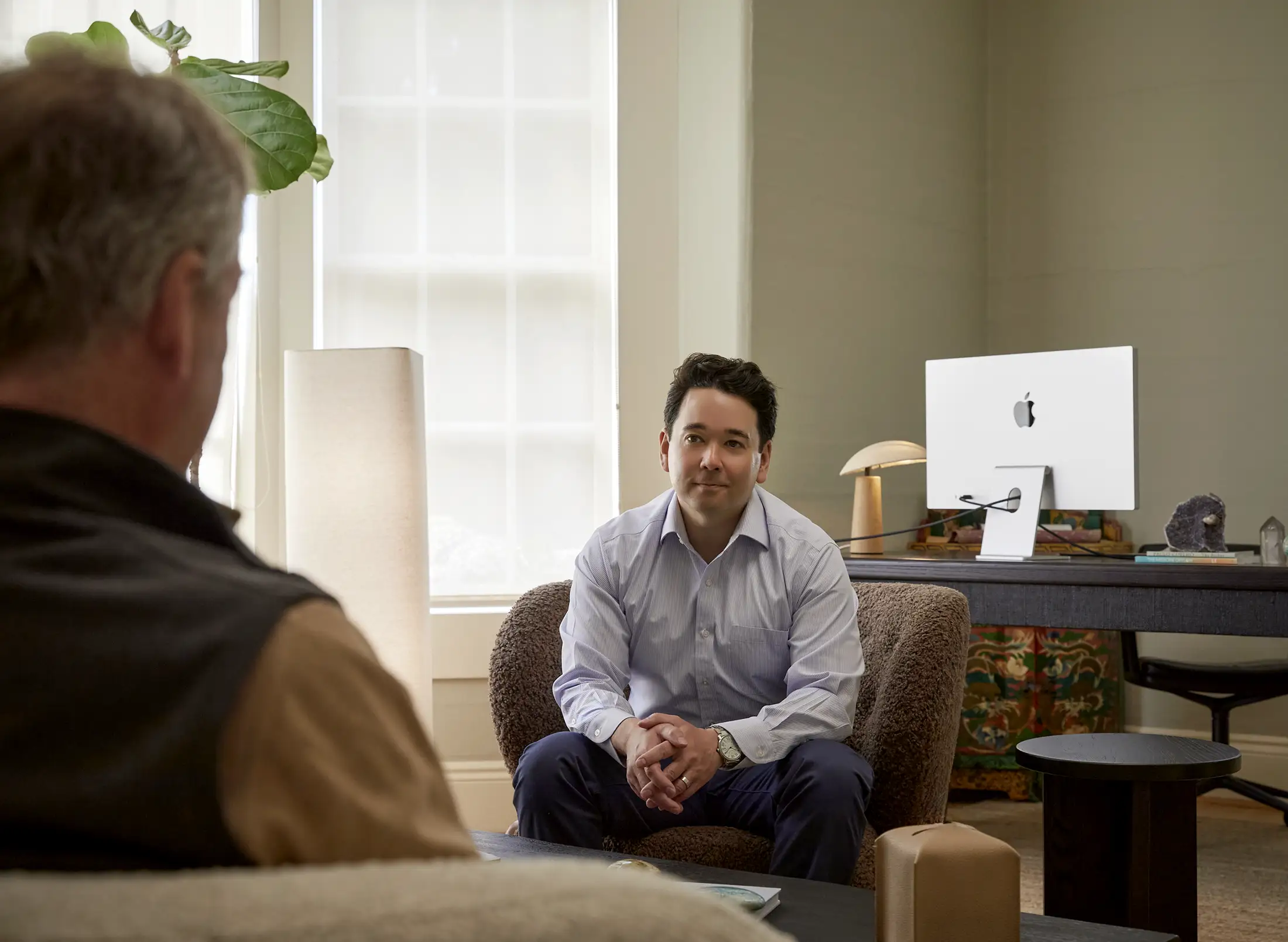
Keith DesRochers, MD
Clinical Insights
Longevity
Should I care about functional medicine?
Functional medicine has become one of the most talked-about approaches in modern medicine—but what does it actually mean? From root-cause thinking and advanced testing to lifestyle interventions and prevention, we explore the principles behind functional medicine, where the evidence stands, and why its emphasis on understanding the whole person continues to resonate with both patients and physicians.
You’ve probably heard the term functional medicine—maybe from a friend who swears by it, a wellness podcast, or a late-night Google spiral. You’re not alone. And your curiosity is worth taking seriously.
At its best, functional medicine asks a simple but important question:
What if healthcare was designed not only to treat disease, but to understand why something is happening in the first place?
The modern functional medicine movement began to take shape in the early 1990s, as clinicians started rethinking how care could better support people living with chronic symptoms, low energy, inflammation, hormone changes, digestive issues, and other concerns that do not always fit neatly into a diagnosis.
The core idea is straightforward: rather than looking at symptoms one by one, look upstream. What might be contributing to the way someone feels?
In some ways, functional medicine is like due diligence for the body. Conventional medicine is extraordinary when something breaks: infections, injuries, emergencies, surgery, serious disease. It gives you the diagnosis, the procedure, the prescription, the fix. Functional medicine is more interested in what may be happening before the obvious break. What are the early signals? Where is the system under stress? What inputs are affecting the output?
That means considering the full picture: food, movement, sleep, stress, environment, hormones, metabolism, genetics, inflammation, and daily habits. Not as separate categories, but as connected parts of a person’s health.
In practice, this often means going deeper than a standard annual checkup. It may include a more detailed health history, a closer look at patterns over time, and lab testing that helps identify early signs of imbalance before they become bigger issues.
It also means asking different kinds of questions.
Why is your energy low?
Why is your sleep disrupted?
Why do you feel inflamed, foggy, anxious, depleted, or not quite like yourself?
Why do certain symptoms keep coming back, even when nothing obvious is showing up?
The goal is not simply to manage symptoms. It is to better understand what may be causing them.
For many people, that framing resonates because they have spent years in the in-between space: not exactly sick, but not exactly well. Conventional medicine is built to respond when there is a clear problem to solve. But it is not always designed for the person who feels chronically unwell without a clear diagnosis.
Functional medicine offers a framework for looking more closely.
The honest caveat is that the evidence is mixed. Many of the tools used in a functional medicine approach are well-supported. Blood sugar testing, inflammation markers, thyroid testing, hormone evaluation, and nutrient assessment can all provide useful information when used thoughtfully.
But functional medicine as a full model is harder to study. Much of the research relies on how patients report feeling, rather than long-term clinical outcomes. Some studies suggest benefit in areas such as inflammatory arthritis, type 2 diabetes, and traumatic brain injury, but the evidence base is still developing. Functional medicine should not replace evidence-based medical care.
What it can do is help connect how someone feels with what may be happening beneath the surface.
We understand how frustrating it can be to sense that something is off without having a clear explanation. Functional medicine gives us one way to ask better questions, look at the full picture, and define what optimal actually looks like for you.
Not alternative care. Thorough care.
—
A note from Dr. Keith
Before medicine, I worked in finance in Tokyo, so I still think in terms of patterns, signals, and risk. You’re looking for the early indicators that something may be under stress before it becomes a bigger problem.
That’s part of what I appreciate about functional medicine when it’s practiced thoughtfully. The foundational principles—looking upstream, considering how lifestyle and environment interact with biology, getting to know a patient deeply over time—are all ones we’ve always found clinically valuable.
Honestly, I think about it less as functional medicine and more as thorough medicine. That’s not alternative care. That’s just good care.